
 Photoshop
 Maya
Maya ZBrush
 Houdini
 Unreal Engine
 Substance Painter
 Blender
 Nuke
Nuke Arnold
 KeyShot
 V-Ray
V-Ray Mari
Mari Marvelous Designer
 Marmoset Toolbag
 Substance Designer
 3ds Max
 3DCoat
 Redshift
 After Effects
 Faceform Wrap
 Lightroom
 OctaneRender
 SpeedTree
 Daz 3D
 Agisoft Metashape
 Fusion
 Modo
Modo RealityCapture
 Gaea
Gaea Cinema 4D
 Gravity Sketch
 Premiere
 Procreate
 Substance 3D Modeler
 Katana
 Mudbox
 Krita
Krita World Creator
 Yeti
Yeti Ziva VFX
 SketchBook
 Quixel DDO
 Mixamo
 Natron
 Quixel Bridge
 Quixel Megascans
 Adobe Medium
 Quixel Mixer
 SynthEyes
 Clip Studio Paint
 SketchUp
 Unity
Unity Gaffer
 Massive
 Materialize
 Ornatrix
 PreForm
 Corel Painter
 Moi 3D
 QuickTime
 Storyboard Pro
 TreeIt
 animBot
 ReCap
ReCap Meshmixer
 DaVinci Resolve
 World Machine
 xNormal


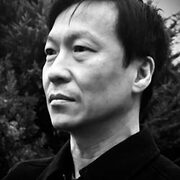


Learn how to create final background designs for animation with Jose Vega, Senior Concept Artist for Magic: The Gathering and former Background Design Supervisor for the Netflix animated series, Castlevania. In this 4.5-hour workshop, Jose demonstrates the speed at which 2D animation backgrounds can be created with the help of 3D assets, using Blender and Photoshop as his tools of choice. Starting with a rough storyboard, Jose demonstrates how to match a perspective and block out a scene in Blender before adding fine details and establishing the lighting with a combination of photo-bashing and digital painting in Photoshop.
Jose details the basics of Blender and covers how to incorporate 3D assets to quickly populate a background design with intricate details and powerful silhouettes. Using the “Neo City” Sci-Fi Mini Kit by KitBash3D, he teaches his techniques for isolating individual elements from larger models in Blender to create your own mini-assets to help populate and customize your scene even further.
Moving on to cover lighting and texturing in Blender, Jose proceeds to master a fully rendered scene complete with reflections, fog, and ambient occlusion, sharing his thought processes and techniques along the way. As the final step in his pipeline, he discusses his personal approach to using render passes generated from Blender to create alpha channels that aid the final polishing work done in Photoshop.
Project files provided with this workshop include Jose’s storyboards, work-in-progress images, and his final, multi-layered Photoshop document.
9 Lessons
In this workshop, Jose Vega demonstrates a 3D-first approach to background design that maintains efficiency and consistency in professional animation production. By investing time in 3D modeling, artists can produce multiple high-quality backgrounds faster, while maintaining visual consistency across sequences. This approach reflects real-world studio practices where time and budget constraints require decisions about where to allocate resources.
Duration: 28m 40s

This lesson introduces the tools and workflows in Blender most frequently used for background design. Additional concepts will be introduced during the scene-building process. This should enable new users to start creating immediately while developing a deeper understanding of Blender through practical experience.
Duration: 23m 29s

This lesson demonstrates how to translate storyboards into blocked-out 3D environments. The main takeaway is to work efficiently, starting with basic shapes, focusing only on camera-visible areas, and establishing proper scale and perspective early in the process. By keeping blocking rough and flexible, artists can explore design options and make adjustments before committing to detailed modeling.
Duration: 51m 9s

This lesson emphasizes the importance of establishing solid foundations for lighting in 3D, using basic light types and settings, without investing too much time in perfecting volumetrics, or creating fine details that could be more quickly achieved in Photoshop. By understanding the strengths of each tool, artists can work faster while maintaining creative flexibility for color and mood exploration.
Duration: 36m 55s

This lesson explains why color scripts serve as a communication tool and directional guide. Getting the mood, lighting, and atmosphere correct is far more valuable than achieving perfect detail. By focusing on what matters most, artists can produce multiple panels that successfully guide the final 3D rendering and animation work.
Duration: 31m 59s

This lesson demonstrates a kitbashing workflow in Blender, transforming premade 3D kits into customized scene elements. By taking the time to separate merged objects into individual assets, rather than being limited to the original configuration of the kit, artists can expand their creative possibilities and build more unique environments.
Duration: 24m 11s

This lesson demonstrates how, by using Blender's Eevee render engine to generate strategic render passes and using custom shader techniques, artists can generate highly detailed base images in relatively short timeframes. A multi-layer EXR approach provides flexibility in post-production, while a reusable scene setup allows for creating multiple shots with minimal additional effort, making this process significantly more time-efficient than traditional painting methods.
Duration: 17m 21s

This lesson emphasizes that effective matte painting relies heavily on proper setup and organization. By using Blender's render passes intelligently in Photoshop, artists can transform 3D renders into production-ready painted environments. The approach of alternating between photobashing, manual painting, and adjustment layers allows for gradual refinement that maintains flexibility during production.
Duration: 28m 12s

The final lesson in the workshop emphasizes that technical skills must be paired with strong communication practices for successful production work. By maintaining clear dialogue between departments, organizing work properly, and keeping team members informed of any changes, artists can improve workflow efficiency and final product quality.
Duration: 1m 26s

Primary tools
For this workshop you’ll need:
Project Files
Downloading the workshop files gives you access to Jose Vega's complete digital painting project, including all the source materials needed to follow along. Inside, you'll find:
- Source PSD file – The original layered Photoshop document to explore the technique and workflow
- Final artwork reference - A high-quality JPG of the completed illustration to guide the artist's progress - These project files have been provided by the instructor to make it easier to follow along with the workshop. –
Skills Covered
Who’s this Workshop for?
This workshop is designed for intermediate to advanced concept artists, background designers, and animation professionals seeking to accelerate their production pipeline. Artists with basic Blender and Photoshop skills looking to integrate 3D workflows into 2D animation background creation will find Jose Vega's training especially valuable.
Digital artists in games, film, or television who need to deliver high-quality backgrounds efficiently will benefit greatly from Jose's hybrid approach. The workshop provides practical, industry-standard techniques that translate directly to commercial animation projects.
Learning Outcomes
On completing this workshop, artists will have a good understanding of the professional pipeline for creating polished 2D animation backgrounds using 3D and digital painting techniques.
Key skills include:
- How to match perspective and block out scenes in Blender.
- How to incorporate and modify KitBash3D assets for custom background design elements.
- How to break up elements from larger 3D models to create reusable mini-assets.
- How to establish lighting, reflections, fog, and ambient occlusion in Blender renders.
- How to generate and utilize render passes for creating alpha channels in post-production.
- How to combine photo-bashing with digital painting techniques for final background polish.


